Sunday, January 15, 2012

Countdown to Planyavsky at MIT (12 days)

For decades, Peter Planyavsky was the organist and/or music director of the Stephansdom in Vienna, one of the world's great cathedrals. The highlight of his tenure was undoubtedly the installation of the Rieger organ in 1991. It must certainly be the most heroic 56-stop tracker ever built! Playing a concert on it in 2001, on my very first European tour, was one of the great thrills of my life (especially the Liszt B-A-C-H). The 32' Principal does not purr; it roars. And I remember the Pedal reeds 16' and 8' being so large-scale that, even in big pieces, I usually used one or the other. But then there were more delicate colors on the Brustwerk and elsewhere. In fact, I had no trouble finding the right textures for the Bach Trio Sonata that I played. (I can't think of many cathedrals in which I would attempt such a work.) On the Solowerk, the big reed with the big cornet enable a melody to soar above the rest of the organ in a very Planyavskian sound.

The Pipedreams website has featured this instrument in five of its problems. Links to all can be accessed from this page:

http://pipedreams.publicradio.org/gallery/austria/vienna_stephansdom_rieger.shtml

Photo: the author at the Stephansdom organ (July, 2001).

Saturday, January 14, 2012

Countdown to Planyavsky at MIT (13 days)

Last week in one of my posts, Marian Ruhl Metson wrote of her experience with the composition by Peter Planyavsky, "Fantasie in memoriam A.H." (The title refers, of course, to Anton Heiller). Below are YouTube links of this very interesting composition, played by a student of Planyavsky, Peter Peinstingl.

http://www.youtube.com/watch?v=5A8-xVfu8Hs (Part I)

http://www.youtube.com/watch?v=k_zLjUlpYWQ (Part II)

Friday, January 13, 2012

Countdown to Planyavsky at MIT (14 days)

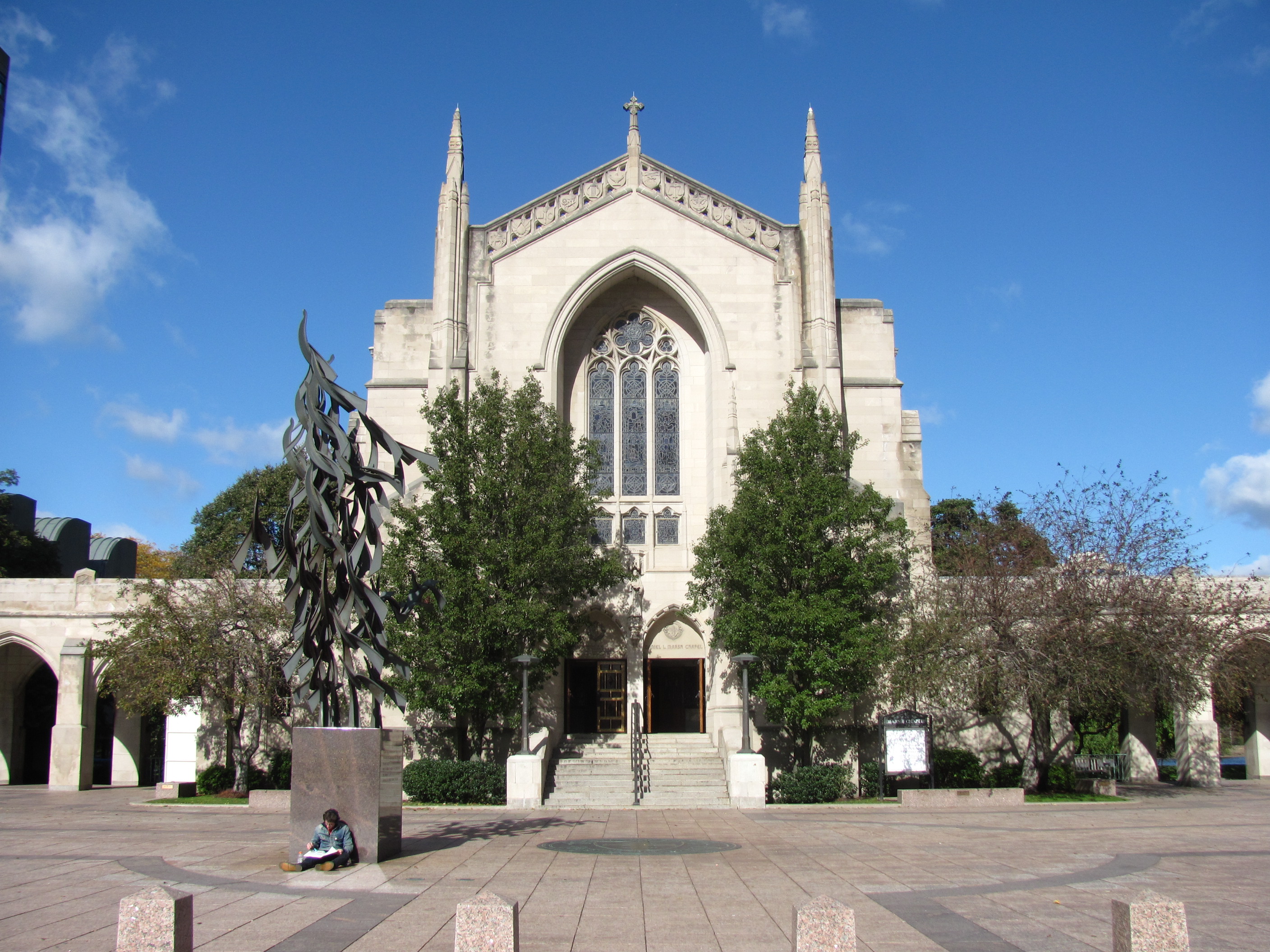
By now you've heard me mention that on Friday, January 27, at 8 p.m., legendary Viennese organist Peter Planyavsky will play an organ recital at MIT's Kresge Auditorium. But I want to mention also that earlier that day, from 10 a.m. to 12 p.m., Planyavsky will give an organ masterclass at Boston University's Marsh Chapel, featuring a student from MIT and several students from BU's Master of Sacred Music program.

The Master of Sacred Music (MSM) program is quite an extraordinary one; there is not another program like it in Greater Boston. The MSM degree is offered jointly through the School of Theology and the School of Music and administered by the School of Theology. Since the MSM is essentially professional training for employment as a church musician, the program is offered with two concentrations: organ and choral conducting. The distinguished MSM faculty include Dr. Andrew Shenton (MSM Program Director) and Peter Sykes (organ). It's a program that's as wonderful as it is unique. Kind of wish I were a student again, so that I could enroll!

Thursday, January 12, 2012

Countdown to Planyavsky at MIT (15 days)

Photo: The 1742 Schmahl organ in Sitzberg, near Zürich.

Peter Planyavsky was one of Heiller's greatest students and closest friends. He later became Heiller's biographer. Who was this Heiller character?

Anton Heiller was the greatest interpreter of Bach's organ works of his time -- maybe of all time. But there are several facts that are very interesting about this.

First: It's hard to think of anyone else of Heiller's generation or the generation before who played Bach anything like him. From whom did he learn how to play Bach like that? Who influenced him? Where did he get it? (I asked that question once to my teacher, the Heiller student Yuko Hayashi. She answered, "From Bach.")

Second: Heiller could as easily have had a career as a conductor. In fact, at age 23 he was offered the job as conductor of the Vienna State Opera! He turned it down. Why? So that he could devote more time to playing Bach on the organ!

There isn't space to speak of Heiller's Bach playing in any detail. But there is an anecdote worth repeating, told to me in 1994 by Yuko Hayashi.

YH: He played the Orgelbüchlein up in the hills near Zürich [Sitzberg]. An organ restored by Metzler [in 1961, built by G. F. Schmahl c. 1742] And I was assisting him, turning pages. Jean-Claude Zehnder was there. By the way, I'm not a good assistant, so I stayed away from doing it. But that one time in Switzerland when I did do it, it was so EASY. He had this rhythm in his body, and he didn't have to do anything like that [nodding]. He didn't have to nod, he BREATHED. And I felt his breathing. It was so easy.
LC: Like a singer, he breathed, and you knew exactly where to turn the page or pull the stop.
YH: And he was so relaxed. Before the concert he was very nervous. But when the music started … CALM.
LC: So he played the concert.
YH: First he had dinner. Then he went up to this mountain, when into the church, and started to try out registrations, one after another, while Jean-Claude Zehnder and a few students from out in the church would say, "That's good." Then it was time for the concert. Double the amount of people that the church could hold showed up! And you know what he did? He announced to the audience, "Half of you go back into town for dinner and come back later." He played the recital, the whole Orgelbüchlein. He smoked for ten minutes -- in those days he smoked. Now the second audience that had had dinner was in place in the church, and he played the recital AGAIN! I got tired just turning the pages. He got better and better. Meanwhile, there were cows around. The cows liked the music. You could see them through the windows and hear their beautiful bells.
LC: And this was all happening during the concert?
YH: Yes.
LC: It must have been idyllic, having this mixture of nature and classical music.
YH: Then I understand, after that, he recorded.
LC: He made his Orgelbüchlein record.
YH: Yes.

Peter Planyavsky plays a free organ recital at Kresge Auditorium, Massachusetts Institute of Technology, on Friday, January 27 at 8 p.m.

Wednesday, January 11, 2012

Countdown to Planyavsky at MIT (16 days)

Kresge Auditorium, as seen from the Chapel. (Photo by L. Ciampa, 12 Oct. '10)

Upon the death of his father Herman Heinrich ("Henry") Holtkamp (1858-1931), Walter Holtkamp, Sr. (1894-1962), assumed control of the company that was then called the Votteler-Holtkamp-Sparling Organ Company. Despite the financial difficulties of the Depression, Walter wasted little time in developing his radical ideas. His 1933 addition to the E. M. Skinner organ of the Cleveland Museum of Art (the first "Rückpositiv" ever built in North America), quickly established him as the most avant-garde organ builder in America. These Baroque-inspired instruments had a brightness and clarity completely unfamiliar to audiences of the 1930s, who were accustomed, instead, to the lush, woolly sounds of organs by E. M. Skinner - instruments more suitable for Wagner transcriptions than for Bach's great organ works.

In 1951 the company was renamed the Holtkamp Organ Company; Walter was named President. The company's finest work dates from this period, including important installations at Crouse College (Syracuse University) and Battell Chapel (Yale). The consultant for many Holtkamp instruments, including the two MIT organs, was Melville Smith (1898-1962), one of the most influential organists of his time. In addition to his involvement at MIT, Smith was President of the Longy School. Smith was one of the leaders of the so-called Organ Reform Movement, which repopularized the Baroque music and organs that Smith so loved. He had a particular passion for French Baroque organ music, especially that of the composer Nicolas de Grigny (1672-1703). This explains why on Chapel organ, the stop named "Cymbal" is actually a Sesquialtera.

Eero Saarinen (1910-1961) was a Finnish-born architect of world renown, known for such diverse creations as the St. Louis Arch and the tulip chairs on Star Trek. Saarinen designed and buit MIT's Kresge Auditorium and the smaller Chapel.

Why was Saarinen as amenable to acoustics and organ placement in the Chapel as he was unamenable to them in Kresge?

It is said that Walter did not enjoy building the Kresge organ. Besides the cramped space and unideal placement relegated by Saarinen's design, the auditorium was not ideal acoustically - a fact that didn't seem to disturb Saariren. Acoustics, Saarinen said in 1955, were a "modifying factor" but "not a science with the authority to impose a basic shape." Therefore, according to legend, Saarinen attempted to mollify Holtkamp with the Chapel, by providing him with an ideally placed organ loft and the type of acoustical environment about which organ builders dream.

Nevertheless, the Kresge instrument is a large and colorful one which fills the 1226-seat auditorium with some of Walter Holtkamp's most characteristic sounds.

John Allen Fergusen's judgment of the Chapel organ could easily be applied to the Kresge organ, as well:

"[The] organ appeared in the mid-fifties and embodied so much of the essence of Holtkamp's style, convictions and interests. ... [This organ] reveals Holtkamp, as much a radical in his field as Frank Lloyd Wright was in architecture, at work in a space designed by the respected contemporary architectural firm, Eero Saarinen and Associates. Here the combination of gifted organ builder working together with a creative architect demonstrates again that organ building, when practiced responsibly, can produce instruments of exceptional visual and aural distinction." (John Allen Ferguson, "Walter Holtkamp: American Organ Builder" (1979)).

Peter Planyavsky plays a free organ recital at Kresge Auditorium, Massachusetts Institute of Technology, on Friday, January 27 at 8 p.m.

Tuesday, January 10, 2012

Countdown to Planyavsky at MIT (17 days)

Peter Planyavsky at the Musikverein in Vienna (2011).

When Peter Planyavsky began his career, Victorian music, choral as well as organ, was virtually unknown in Austria; it was certainly not standard fare. In the ensuing decades, Planyavsky has been Austria's most energetic promoter of this repertoire. I asked him a few questions on the topic:

LC: Before you came on the scene, how much Victorian music, if any, was being sung and played in Austria?

PP: Most of the Victorian music was practically non existent here - Stanford's Beati quorum via was known and performed but nothing else. Now it's done a bit here and a bit there.

LC: How do the Austrians feel about this “exotic” music?

PP: People generally like it; harmonically, it is not so different from our own little things from the same period. The main difference is the use of the organ. But in Austria, there were no Swell divisions of the kind you need – and even if there were, the average organ would not have pistons. It was actually near to impossible to perform these things in Austria before the nineties!

LC: What sparked your interest in this repertoire?

PP: I have been in the UK a couple of times, plus Australia plus Canada, so I've heard quite a lot of it. But the actual "spark" was triggered in 1993. Then I started collecting CDs and introduced the music to St. Stephen's Cathedral. [At one time Planyavsky has the unusual dual responsbility at the Stephansdom of Organist and Music Director – traditionally two separate jobs in Austria.]

LC: Is there a particular concert of Victorian repertoire in Vienna that comes to your mind as being particularly memorable?

PP: One of the big events around the organ dedication in the Musikverein in Vienna was a choral-and-organ-concert where we did [Stainer's] I saw the Lord, plus [Britten's] Rejoice in the Lamb. [This took place on May 16, 2011, in the Großer Saal of the Musikverein.]

LC: What about elsewhere in Austria?

PP: I led a choral week in Salzburg in 2004 concentrating on the repertoire, with a big service in the Cathedral – which houses an 60-stop Metzler. All tracker, two assistants, and a lot of sweat and blood...

Peter Planyavsky plays a free organ recital at Kresge Auditorium, Massachusetts Institute of Technology, on Friday, January 27 at 8 p.m.

Monday, January 9, 2012

Countdown to Planyavsky at MIT (18 days)

Peter Planyavsky with the author (Brookline, March 9, 2004). Seems odd that the Austrian is drinking the chianti and the Italian is drinking the Weizenbier!

In March, 2004, at St. Paul's Episcopal Church in Brookline, MA (where I was then Music Director), I organized "HeillerFest," a week-long festival commemorating the 25th anniversary of the death of the great Anton Heiller. Naturally, a "HeillerFest" would not have been complete with Heiller's star pupil, close friend, and future biographer, Peter Planyavsky. The following is an excerpt from an article that I wrote for the July, 2004, issue of The Diapason. The excerpt describes the opening event, a Choral Evensong which I personally tailored with the sole purpose of showing off Planyavsky's improvisational gifts.

"There are two types of performers: those who emit electricity, intensity, and sometimes neurosis, for whom every piece seems a matter of life or death (Caruso, Horowitz, Heifetz); and those who exude mental and physical health, for whom each pieces feels like the first of many encores (Gigli, Rubinstein, Kreisler). Peter Planyavsky is of the second type. The 75-minute Evensong service seemed short. One felt that another twenty-five improvisations could have fallen from his sleeve without any detectable effort.

"There is something Beethovenian about Planyavsky, a certain Viennese ruggedness. It snowed as we walked down St. Paul Street together, yet he seemed unconcerned about his photocopied prelude and postlude which he held, uncovered, under his arm. "In Vienna I always walk around like this, "he explained. He spent not much more than an hour at the Bozeman organ, an eclectic instrument on which the stop names are on plaques next to the stop knobs. I myself occasionally pull the wrong stop! Not only did he never do that, but he had a total comprehension of the organ's tonal resources, as if he already knew how every combination would or wouldn't work.

"I knew firsthand of Planyavsky's brilliance as a liturgical improviser, and I designed the Evensong around it. No trite compline hymns for him; I chose Aus tiefer Not and O Welt, ich muß dich lassen. And while the prayerbook rubric permits a "moment of silence" before the Mag and the Nunc, respectively, I translated "moment of silence" as "three-to-five-minute organ improvisation." The individual improvisations complemented and contrasted each other: the simple effectiveness of his bicinium on Le Cantique de Siméon; the color and fluid virtuosity of his Magnificat; the rich, impenitently German-Romantic O Welt; and so on. Each improvisation seemed to enhance the others." (From The Diapason, July 2004, p. 14)

Peter Planyavsky plays an organ recital at Kresge Auditorium, Massachusetts Institute of Technology, on Friday, January 27 at 8 p.m. Admission for this grand event is FREE.